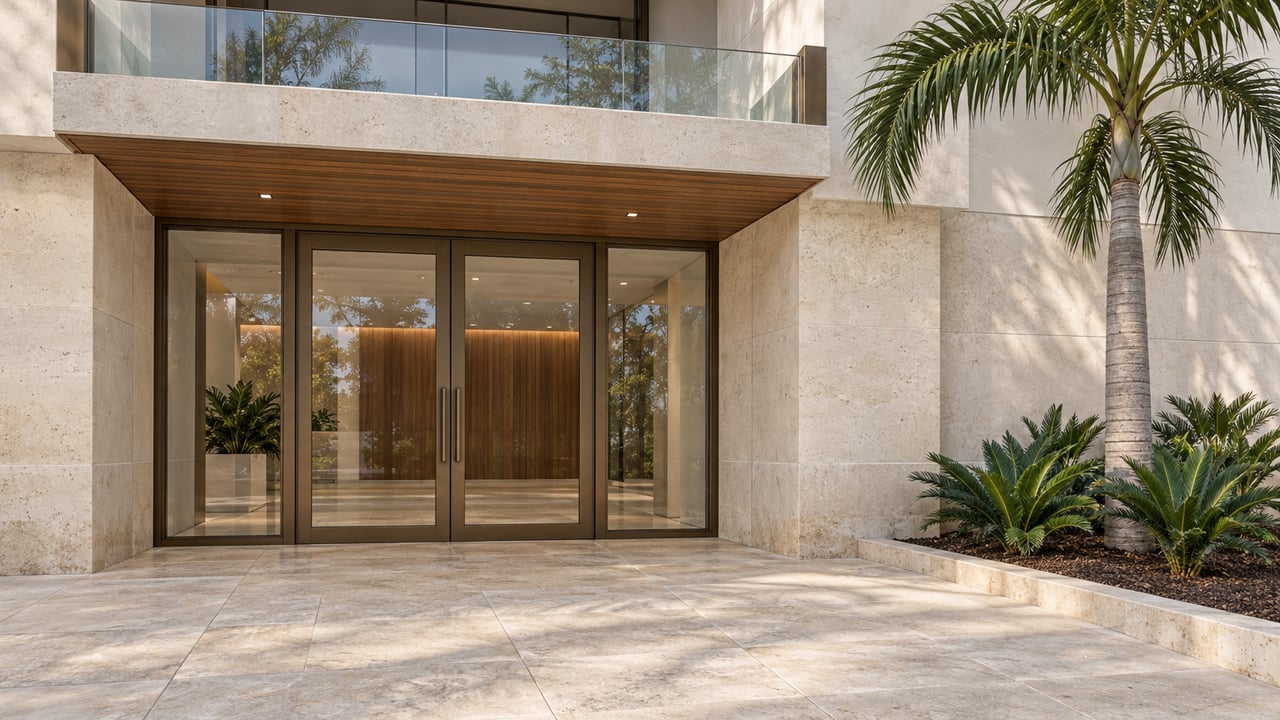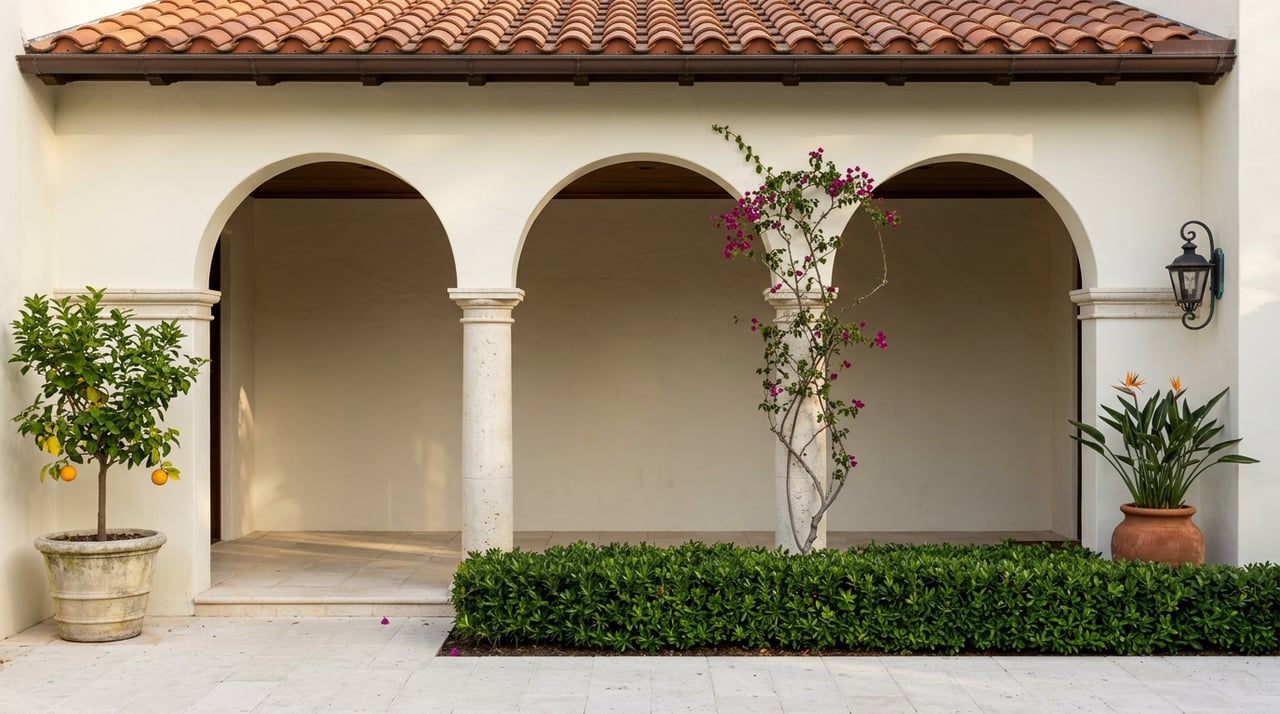
Before you make an offer in Coral Gables, understand this: the city's Board of Architects reviews almost every exterior change to a residential property, from window replacements down to mailbox placement, and its meetings are held every Thursday morning. A typical review runs three to eight weeks per cycle, and major renovations often need two to four cycles before a permit is issued. That timeline is not a footnote. It is a pricing input the portals never show you, and it explains a great deal of what is happening under the surface of the 2026 market.
Here is the claim that most buyers walk in without: Coral Gables in 2026 is not softening. It is sorting. The headline median is doing one thing while the price-per-square-foot, the waterfront premium, and the design-review clock are doing something else entirely.
The number that contradicts the headline
Compare two figures from the same quarter. In Q1 2026 the median Coral Gables single-family sold price came in at $2.0M, down from $2.12M a year earlier. Read the trade press and you'd think values slipped. Then look at the median price per square foot for the same period: $925, essentially unchanged from $923 in Q1 2025. Homes still moved in a median of 48 days, identical to Q1 2025, with Coral Gables leading its area in transaction volume at 96 single-family closings and another 58 under contract.
| Q1 2026 metric | Coral Gables |
|---|---|
| Median sold price | $2.0M (Q1 2025: $2.12M) |
| Median $/SF | $925 (Q1 2025: $923) |
| Median days on market | 48 |
| Closings | 96 |
| Under contract | 58 |
| Active listings | 208 |
A lower headline against a flat $/SF is a mix-shift signal, not a value decline. Different homes traded, not cheaper ones. That single insight reframes every "Miami is a buyer's market" headline you've read this spring. Miami-Dade at large sits at a decade-high inventory reading of roughly 9.8 months, and MIAMI Realtors reports 6.4 months of single-family supply county-wide as of Q1 2026, textbook balanced-market territory. Coral Gables is inside that county but not inside that pattern.
Why the waterfront premium keeps widening
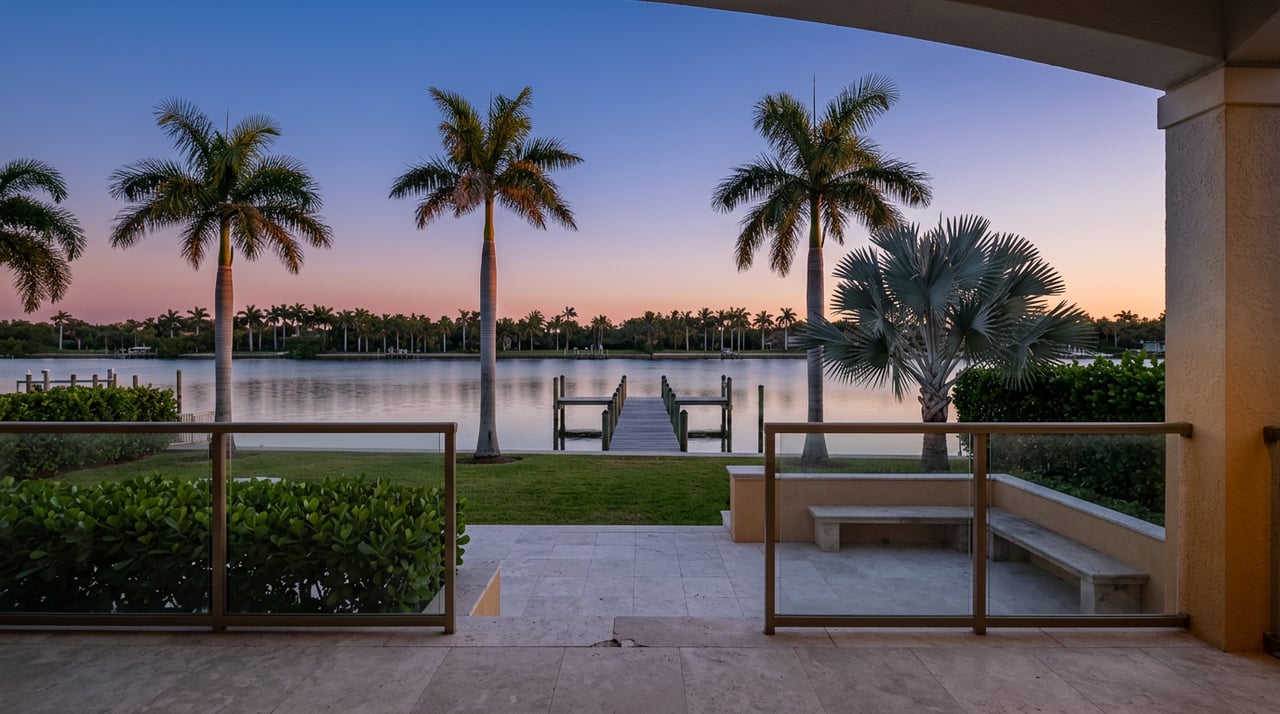
The clearest mechanism behind the sort is the waterfront multiple. In 2016 the ultra-prime Gables Estates tier traded at roughly $1,185 per square foot, about 2.6 times the $456 per square foot fetched by inland east-of-US1 resale homes. In 2026 that same Gables Estates tier trades near $3,100 per square foot, and the east-of-US1 resale comp sits at $1,050. The multiple widened to 3.0.
Standard market theory says a mature neighborhood's inland base should catch up to the top over a decade. In Coral Gables, the opposite happened. The premium expanded. Cocoplum, a mid-waterfront enclave that started from a lower 2016 base near $600 per square foot, posted the strongest percentage gain of any Coral Gables segment at roughly 175 percent, as buyers priced out of Gables Estates and Old Cutler Bay re-rated the next tier down.
For a buyer, the implication is uncomfortable but useful: dockage, lot depth, and bay access are not simply nice to have. They are the assets the market is repricing upward while everything else holds. If the goal is capital preservation over a ten-year horizon, the waterfront tier has, so far, done the work.
The segment underperforming quietly
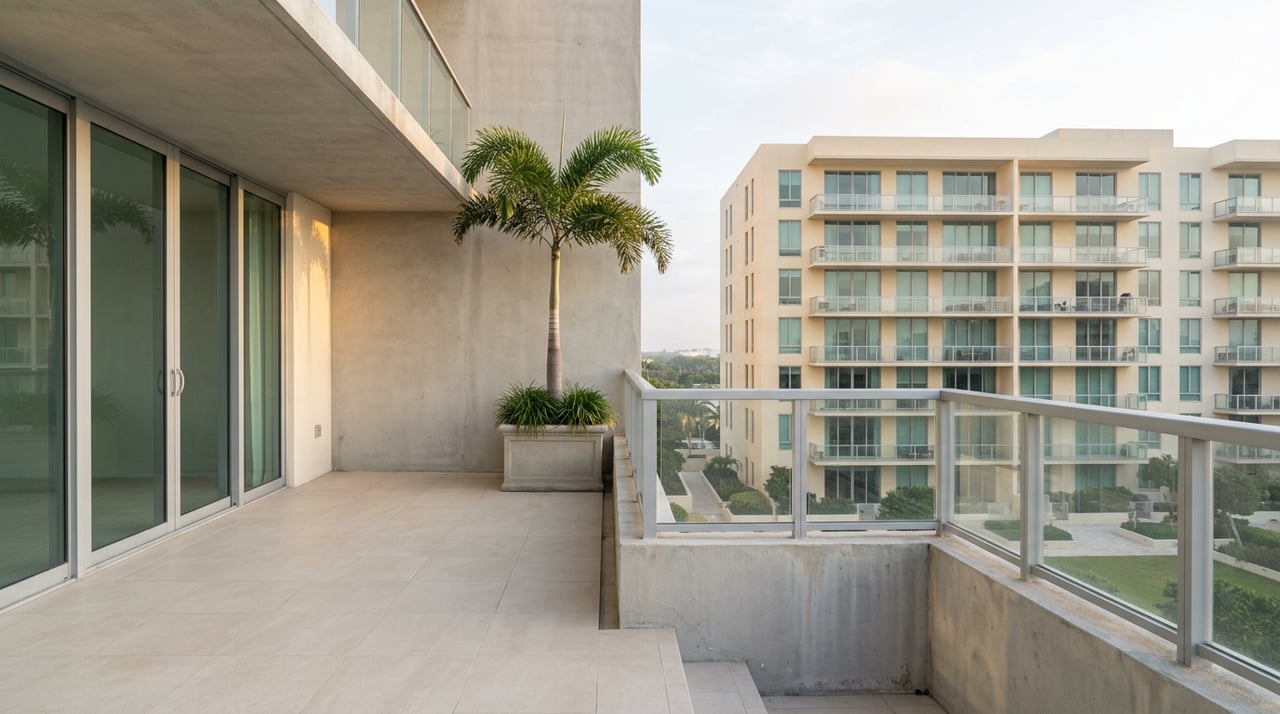
Inland new-construction condos posted the weakest ten-year gain of any Coral Gables segment, roughly 118 percent since 2016. That undershot every waterfront tier and roughly matched the east-of-US1 resale market. Buyers who paid new-construction premiums in Coral Gables' interior in 2016 are up in absolute dollars, but the premium they paid at delivery did not compound the way portal narratives about "new is always better" would predict.
That matters for the pre-construction buyer looking at Coral Gables today. The location tier is doing more of the work than the vintage of the building.
The Board of Architects is a pricing input
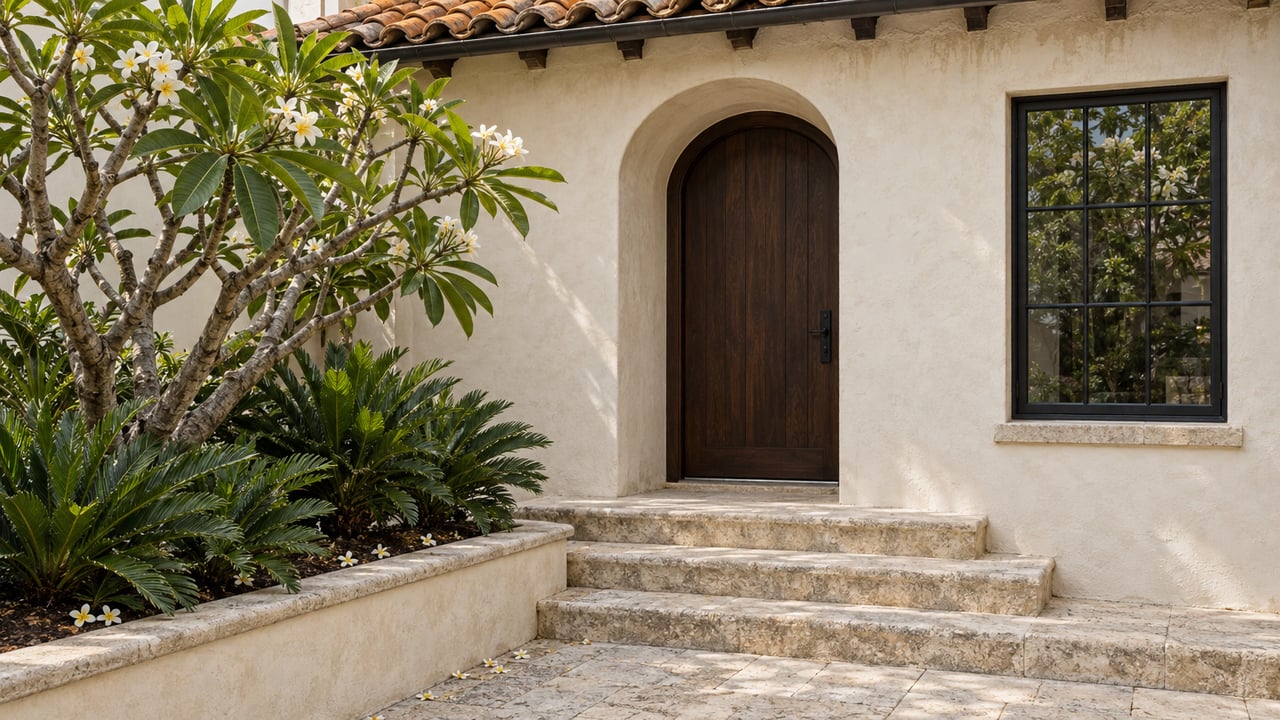
Coral Gables was platted in the 1920s by George Merrick under a mandatory Mediterranean Revival aesthetic, with stucco exteriors in warm earth tones, barrel tile roofs, arched openings, wrought iron detailing, and locally quarried oolitic limestone. The city has protected that framework in code ever since. The Board of Architects is the enforcement layer.
For a buyer planning to renovate, the mechanics of that review compress or expand your effective closing timeline:
- Almost every exterior modification requires BOA approval, including paint color, window replacements, roof tile, pool, pavement, and signs.
- The Board meets every Thursday morning; submittals are typically due about three weeks before a meeting.
- Each review cycle runs three to eight weeks, and major projects commonly go through two to four cycles.
- Exterior paint must come from the city's approved palette of roughly 60 curated colors. Physical brush-out samples, not digital references, are submitted.
- Approved exterior materials are limited to stucco, coral rock, brick, barrel tile, wood shutters, and ornamental wrought iron.
- After BOA sign-off, initial building plan review at Coral Gables Building & Zoning typically takes another 15 to 25 days, with follow-up submissions in a similar window. See the city's Development Review Process Handbook for the full sequence.
- Special Locational Site Plan Reviews for larger projects carry a minimum estimated review timeframe of three to five months.
- All windows, doors, and roofing must meet High-Velocity Hurricane Zone requirements under the 2023 Florida Building Code.
That is not overhead. That is the reason Coral Gables' architectural character has held for a hundred years, and it is a meaningful part of why the market resists compression. A buyer next door cannot redevelop into something incompatible with the block. The governance protects the asset. It also protects the seller who priced correctly, because non-conforming projects that stalled at review do not clear as competing inventory.
The practical rule: engage the Board before you close, not after. Buyers who assumed the review was a formality have redesigned renovations and paid holding costs while they did.
What actually changed in 2026 that portals don't price in
Two macro shifts moved through every Coral Gables transaction in the first half of the year. The Freddie Mac Primary Mortgage Market Survey put the 30-year fixed at 6.46 percent on April 2, 2026, down from the 7 percent-plus readings of late 2024. Fannie Mae is more optimistic than the MBA on where rates finish the year, forecasting roughly 5.7 percent by the fourth quarter. If that call is right, financed-buyer purchasing power meaningfully improves before the next tax cycle.
Florida property insurance is finally easing. Citizens Property Insurance premium reductions began rolling out in spring 2026, averaging 14.0 percent for Miami-Dade policyholders against a statewide average of 8.7 percent. At least 17 private insurers have re-entered the Florida market since the 2022 and 2023 reforms. For years, insurance was the fastest-growing line item at closing on a Gables property. That line is now moving in the buyer's favor.
Two condo-specific facts worth pricing in. Of the 2,397 condominium buildings across Miami-Dade, Broward, and Palm Beach counties, only 21 are approved for FHA loans per HUD, roughly 0.9 percent of South Florida condo buildings. Separately, Fannie Mae and Freddie Mac are eliminating the limited review option for many condo loans beginning August 3, 2026. Buyers targeting inland condos should build financing contingencies with that date in mind.
And a signal from the capital-markets side that portals will never surface: in July 2026 a venture of Intalex, Itero Investments, and Greenwall paid $97.8 million, roughly $267.95 per square foot, for The Ponce, a 365,000-square-foot office complex in Coral Gables. Institutional capital does not price a market at those levels if it sees a durable retreat.
How three buyer profiles should read this
- The relocation family targeting a $1.5M to $3M single-family home. You have the deepest active pool in the area at 208 listings, and Coral Gables led the area in Q1 2026 closings. Focus on lot geometry and BOA-compatible exterior condition. Homes needing exterior redesign will carry a real timeline cost your competing offer may not have modeled.
- The waterfront buyer with a ten-year horizon. The 2016 to 2026 data suggests the premium tier is where Coral Gables has done the work. Consider Cocoplum and entry-waterfront enclaves as the compression trade rather than stretching for Gables Estates at a top tick.
- The pre-construction or condo investor. Interior new-construction condos have posted the weakest decade of any Coral Gables segment. Weigh the Fannie/Freddie limited-review change taking effect August 3, 2026, and the sparse FHA-approved building count against pro forma exit assumptions.
FAQ
Is Coral Gables in a buyer's market in 2026? County-wide Miami-Dade is, with roughly 9.8 months of overall supply and 6.4 months of single-family supply per MIAMI Realtors Q1 2026 data. Coral Gables itself is closer to balanced: 48 median days on market and $/SF holding flat at $925 in Q1 2026, with a wider mix of listings pulling the headline median down.
How long does Board of Architects review actually add to a renovation timeline? Plan for three to eight weeks per cycle and two to four cycles for a major project, then another 15 to 25 days for initial building plan review. Special Locational Site Plan Reviews take three to five months at minimum.
Are interior renovations restricted? Interior work that does not affect the exterior envelope generally goes directly to plan check at the Coral Gables Building & Zoning Department without a BOA visit. Anything visible from a public way, including windows and paint, is another matter.
What does the July 2026 sale of The Ponce office complex signal for residential buyers? It is a capital-markets vote, not a residential comp. A $97.8 million institutional purchase at nearly $268 per square foot tells you sophisticated capital views Coral Gables as durable, which supports the case that residential softness in the headlines is a mix-shift rather than a repricing.
If you are evaluating Coral Gables against Coconut Grove, Pinecrest, or Boca, and you want the segment-level read rather than the headline, Tayse Dantas can walk through the specific block, the waterfront math, and the review timeline before you write an offer. Let's Connect.