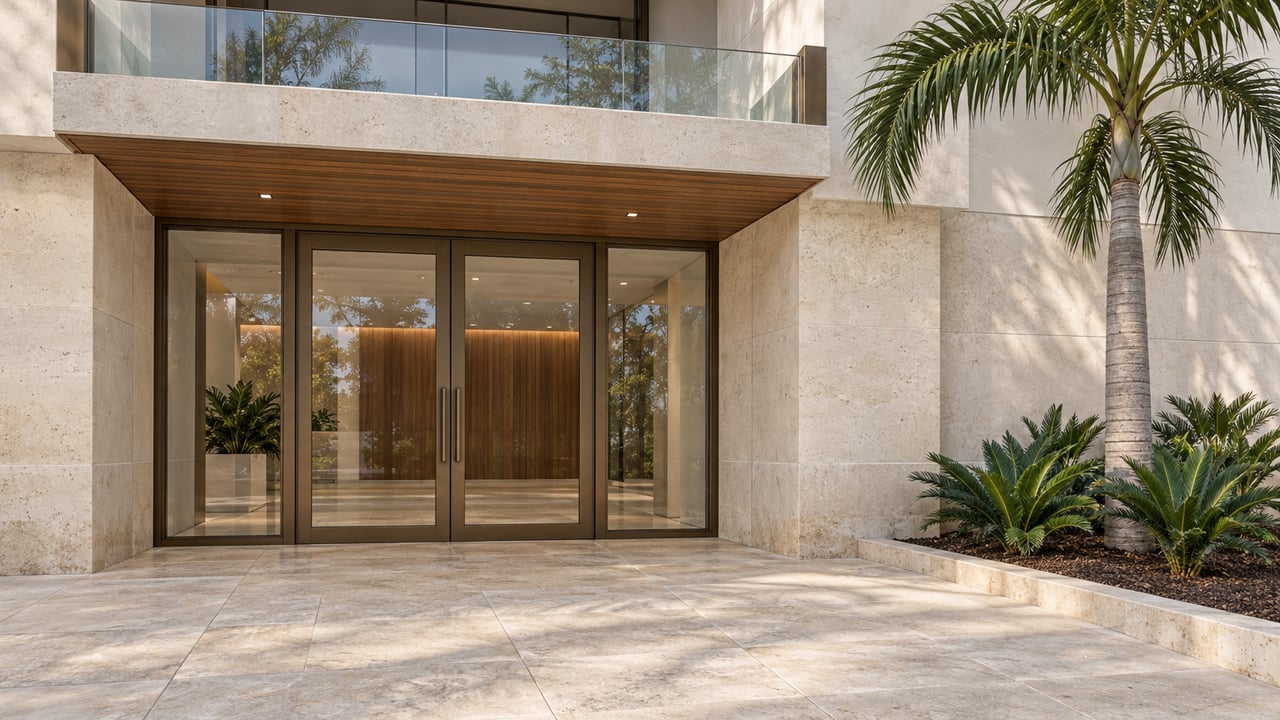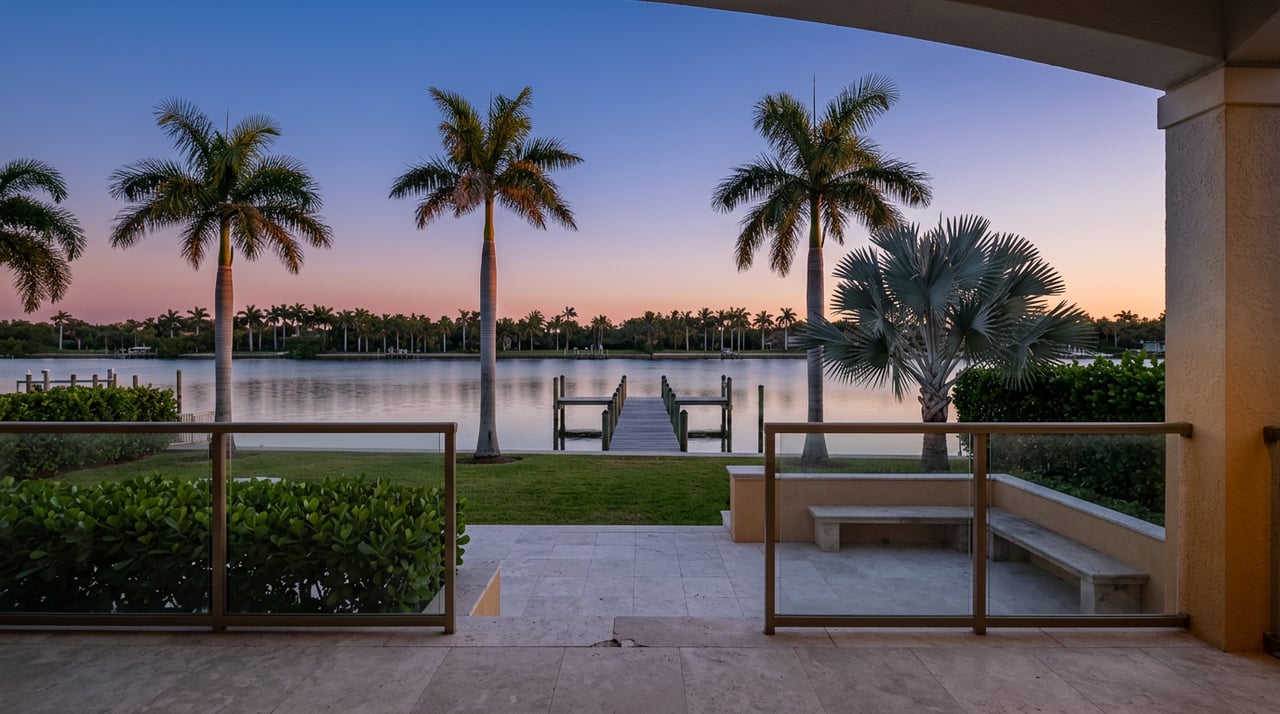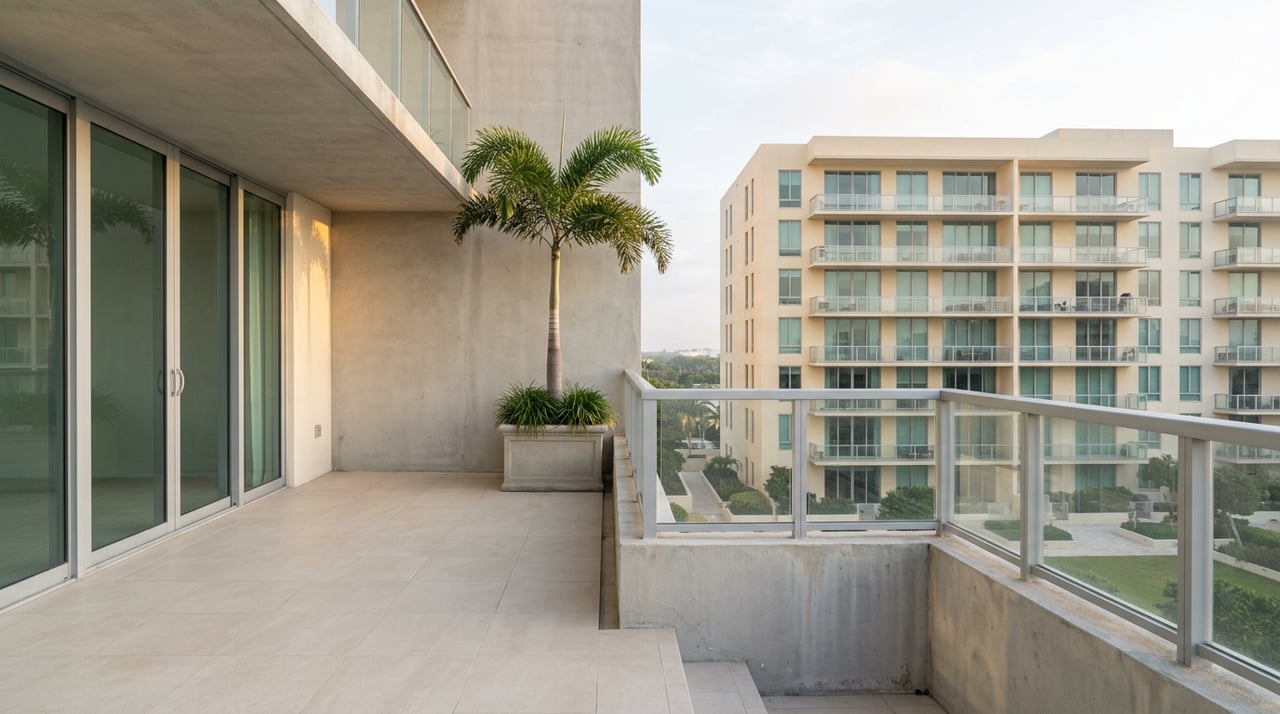
On Collins Avenue, at the address where Bentley Residences Miami is rising, the concrete core has been climbing since June. By late summer it had reached roughly thirteen stories, gaining about a floor every five to six working days. That is real, visible progress on a tower that was marketed for years as a 2026 delivery. The building permit filings and construction updates now point to 2028.
Nobody defaulted. Nobody walked away. The cranes are working exactly as planned. And the completion year still moved by two full years while the tower was already climbing out of the ground.
If you are holding a reservation, a signed contract, or a stack of deposit receipts for a pre-construction unit in Sunny Isles Beach, that gap between the marketed year and the year the tower actually delivers is the single most important number in your file, more important than the floor plan, the finish package, or the view corridor. It determines how long your capital sits committed, what leverage you have if the date keeps moving, and whether the money you have already wired is protected while you wait.
Three Towers, One Pattern
Bentley is not an outlier. It is the current baseline for how Sunny Isles delivers luxury towers right now.
A few blocks north, St. Regis Residences Sunny Isles is being built as two 62-story towers by Fortune International Group and Chateau Group. The South Tower broke ground in August 2024 and is expected to finish in the fourth quarter of 2028. The North Tower, now actively selling, has its groundbreaking penciled in for this year and is not expected to finish until the fourth quarter of 2029. Two towers, one project name, and a full year of separation between their delivery dates before either one is complete.
Then there is the newest entry. In February 2026, the Sunny Isles Beach City Commission approved a 62-story, roughly 820-foot condominium tower at 19051 Collins Avenue, a joint venture between The Related Group, Dezer Development, and BH Group on the site of the former Miami Beach Club, a 108-unit building from 1951 that the group acquired for about $131.8 million. If built to the approved height, it would surpass the Estates at Acqualina and St. Regis to become the tallest residential building in the city. The development team asked the city for up to five years to secure permits, plus up to another five years after permitting to finish construction, with completion targeted for the end of the decade.
Here is the pattern across all three: the completion date a buyer hears at the sales center is a marketing estimate. The completion date that matters legally is whatever "outside date" language sits in the purchase contract, and in this market that number keeps proving to be a moving target, sometimes by years, even on projects with cranes already on site.
What "Completed" Actually Means on Paper
Florida law gives "completion of construction" a specific, narrow definition: issuance of a certificate of occupancy for the building, or substantial completion of construction and finishing where no certificate is issued. That definition is useful to a title company closing a transaction. It says nothing about whether the unit you are moving into is actually finished the way it was sold to you.
The Estates at Acqualina, the Trump Group's two-tower oceanfront project on Collins Avenue, is the clearest illustration of that gap in this market. The project was announced in 2015, broke ground in 2018, and went through a public, multi-year fight with its general contractor, Suffolk Construction, over missed milestones and payment disputes that played out in Miami-Dade Circuit Court starting in 2022. The south tower delivered in 2022 and the north tower in 2023, each roughly a year past its originally stated date.
The certificates of occupancy were issued. The towers were legally complete. That did not end the story. In March 2026, two buyers sued the Trump Group alleging ongoing construction defects and delays kept them from actually using their units after closing. One plaintiff, Ruben Salama, said he bought an 18th-floor unit in 2023 for $7.7 million and sold it in 2025 for $7.5 million, and claimed he lost closer to $1 million overall because prospective buyers walked away after seeing the repair activity still underway in the building. A Trump Group spokesperson said the developer had responded to unit-related matters professionally and that any outstanding concerns were not raised through proper channels.
None of this stopped the building from performing in the resale market. In September 2026, a 52nd-floor penthouse in the same tower sold for a record $33 million. That is worth sitting with: a lawsuit over post-closing construction issues and a record-setting sale can both be true of the same address in the same year. A pending dispute is a diligence input, not an automatic disqualifier. The lesson for a buyer is not to avoid ambitious projects. It is to treat the certificate of occupancy as the start of your own inspection period, not the end of the developer's obligations.
Not All of Your Deposit Sits in the Same Legal Box
This is the part that actually protects your money, and it is where most pre-construction buyers stop paying attention once the excitement of a reservation wears off.
Florida law requires that the first 10 percent of your purchase price be held in a true escrow account when construction is not yet substantially complete. That money cannot be touched by the developer before closing except to refund you. It is the most protected dollar in the entire deposit schedule.
Everything above that 10 percent lives under a different rule. Once construction has actually begun, a developer can withdraw those additional deposit funds from escrow and spend them on real construction costs, but only if your purchase contract specifically permits it. A typical Sunny Isles schedule stacks deposits at reservation, at contract signing, at groundbreaking, and again at a later construction milestone, often totaling 40 to 50 percent of the price before you ever see a closing date. By the time you have made your third or fourth payment, a meaningful share of your capital may already be sitting in the developer's construction account rather than in an untouched escrow account waiting for your closing.
Before your next deposit installment comes due, ask for:
- The escrow agreement, naming the actual escrow agent holding your funds, not just a description in the sales brochure.
- The specific contract clause governing use of deposits above 10 percent, including whether the developer can draw on them once construction starts.
- The purchase contract's outside date, the actual contractual deadline the developer must meet before you gain a right to cancel, separate from any marketed delivery year.
- Written confirmation of how a refund would be processed and within what timeframe if the outside date passes without delivery.
The 15-Day Window You Already Have
Florida law also gives every residential condominium buyer a 15-day period after signing the purchase contract, and after receiving the developer's required disclosure documents, to void the contract in writing for any reason. If the developer later amends the condominium documents in a way that materially changes the offering to your disadvantage, a new 15-day window opens.
This right is easy to miss because it runs quietly in the background of a fast-moving sales process, but it is one of the few moments where a buyer holds real, unilateral leverage. It is also why the reservation stage matters more than it feels like it should. Reservation deposits must sit in escrow and be immediately and unconditionally refundable on written request, before you have signed anything binding. Treat that stage as a genuine decision point, not a formality on the way to a contract you have already decided to sign.
None of this argues against pre-construction as a strategy. Sunny Isles has also delivered, on schedule, buildings like Turnberry Ocean Club and the Ritz-Carlton Residences, both completed in 2020 and both available today as finished, inspectable product with a real operating history. Choosing between a delivered building you can walk through this week and a tower still climbing toward a 2028 or 2029 completion is a legitimate strategic decision, not just a matter of which one photographs better. It comes down to how much timeline uncertainty you are comfortable carrying, and how carefully your contract protects the capital you commit while that timeline plays out.
If you are weighing a reservation in Sunny Isles right now, or trying to read what a specific developer's contract actually promises versus what the sales center is showing you, Tayse Dantas works through that file line by line before you wire another dollar. Explore the current Sunny Isles pipeline through our Sunny Isles neighborhood guide or review the mechanics further in our pre-construction guide, then let's connect.
FAQ
If a Sunny Isles tower's completion date slips, am I automatically entitled to my deposit back? Not automatically. Your right to cancel and recover your deposit depends on the outside date written into your specific purchase contract and whether the developer has exceeded it, not on the year originally used in marketing materials.
Is any part of my deposit ever completely risk free? The first 10 percent of the purchase price must sit in a protected escrow account under Florida law when construction is not substantially complete. Amounts above that threshold can be released to the developer for construction costs once building has begun, if your contract allows it.
What if the developer changes the finishes or floor plan after I sign? A material change to the condominium documents that works against you can open a new 15-day window to void the contract. Whether a specific change qualifies as material depends on the facts and the contract language.
Should news of a lawsuit against a developer make me walk away from a project? Not on its own. Litigation history is one input among several, alongside the contractor relationship, the escrow structure, and the developer's completed track record. It deserves attention, not automatic disqualification.