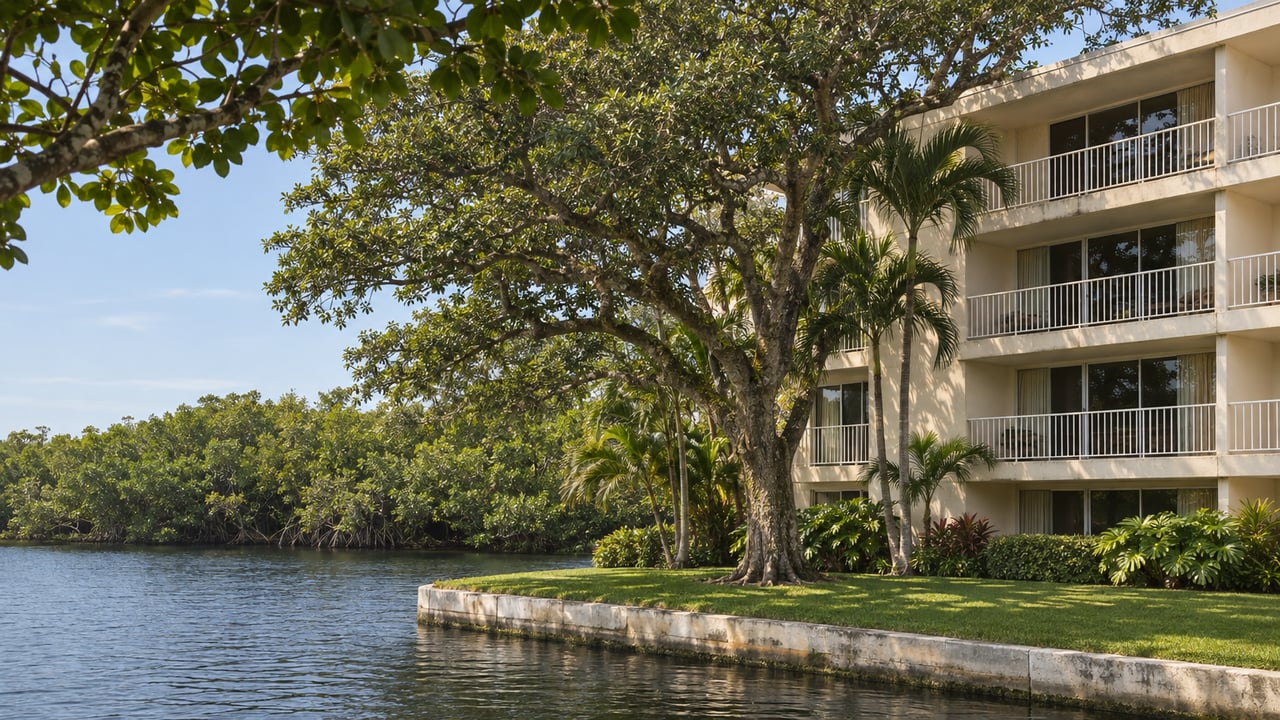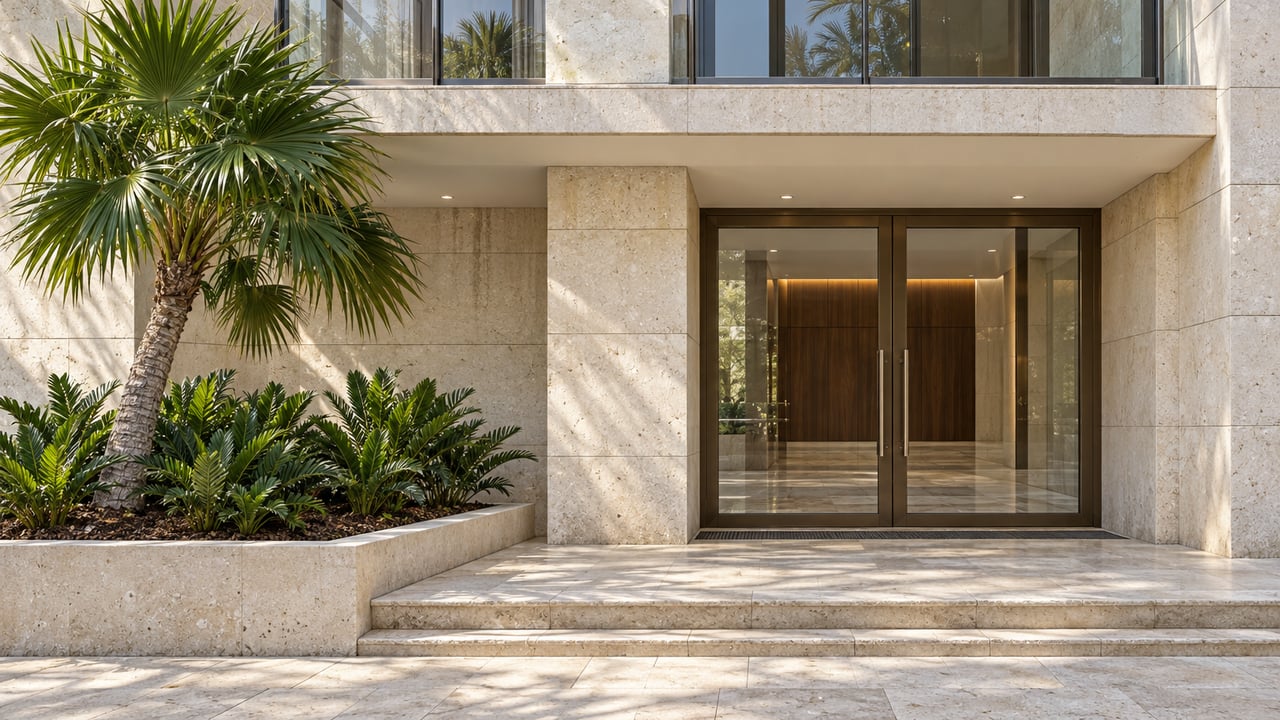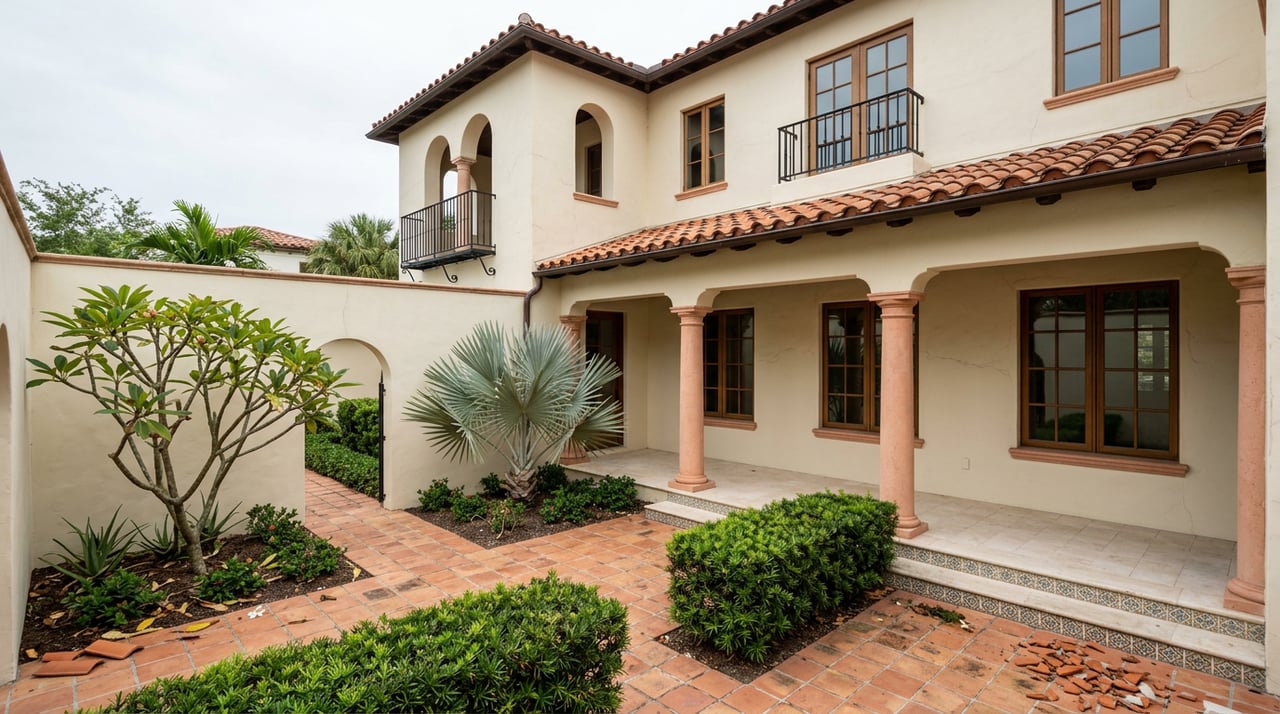
According to the Gables Gazette, on June 18, 2025, the Coral Gables Code Enforcement Board sat down to a docket that looked less like routine housekeeping and more like a cross-section of everything that can go wrong on a title search. Two adjacent apartment buildings on Catalonia Avenue cited for air conditioning systems, exterior lighting, clay tile flooring, metal doors, awnings, and a full roof replacement, all installed without permits. A designated historic home on Zamora Avenue where the windows had been swapped without design approval, a violation serious enough that the Historic Preservation Board could order the original windows restored. A property on Perugia Avenue cited for cutting down city trees with no permit at all. A home on Granada Boulevard flagged for extensive modifications, also unpermitted.
None of these owners set out to complicate a future sale. Most of them were probably just trying to fix a roof or clear a sightline. If you're planning to list a home here, the paperwork you inherited from an owner two or three transactions back can matter more than your staging budget.
A city that checks harder than its neighbors
Coral Gables enforces its building and preservation codes more actively than most of Miami-Dade, and that enforcement doesn't stay quiet once a case is opened. According to AGKGC, once the Code Enforcement Board rules on a violation and assesses a fine, that fine becomes a lien recorded against the property. Fines can run up to $500 a day with no cap once a case reaches the board, and those liens show up when a title company runs its search during a transaction. A buyer's lender will see it. So will the buyer's attorney.
The same pattern applies to open permits that were simply never closed out. A roof gets replaced, the contractor pulls a permit, the final inspection never happens, and the file sits open in the city's system for years. The house looks finished. It isn't, on paper. According to Cosmo Management Group, homeowners routinely discover they've inherited an open permit from a previous owner without ever knowing it existed.
Three specific things that reach the closing table
Unpermitted work, liens, and disclosure. In Coral Gables, if it was ever cited and fined, it's a recorded lien.
Tree removal has a lower bar here than almost anywhere else in the county. According to Grove Tree Service, Coral Gables protects any tree with a trunk diameter of 3 inches or more measured at breast height. Miami-Dade County's baseline standard, by comparison, only protects trees at 18 inches or larger, and neighboring Pinecrest and the City of Miami both use that same 18-inch threshold. A tree that would never need a permit in unincorporated Miami-Dade can trigger a fine of $10,000 or more per tree inside Coral Gables city limits, and unauthorized removals can surface in a title search the same way an unresolved code violation does.
| Jurisdiction | Protected tree threshold |
|---|---|
| Coral Gables | 3 inches DBH |
| Miami-Dade County (unincorporated) | 18 inches DBH |
| Village of Pinecrest | 18 inches DBH |
| City of Miami | 18 inches DBH |
Exterior work on a historic property needs sign-off before the permit exists, not after. According to the City of Coral Gables' preservation guide, if a home is locally designated or sits within one of Coral Gables' historic districts, a Certificate of Appropriateness has to be issued before the building department will even open a permit for exterior work. Miss that step, as the Zamora Avenue case shows, and the fix isn't a fine you pay and move past. It can mean putting the original materials back.
The clock nobody budgets for
Sellers who assume a quick pre-listing refresh, a repainted facade, a reroof, a new set of windows, often don't realize how long approval can take once a historic designation or district applies. Staff-level review of a straightforward Certificate of Appropriateness can close in a matter of weeks. But if the scope requires a hearing in front of the Historic Preservation Board, the timeline commonly runs six to twelve weeks or longer, driven by public notice requirements and the board's own meeting calendar, not by how simple the project looks on paper.
That timeline doesn't map cleanly onto a listing schedule. A seller who wants new impact windows installed before photos go live in six weeks may find the review process alone eats that entire window, before a contractor even picks up a tool.
What to check before you list
The fix isn't complicated, but it has to happen early, before there's a buyer, a lender, and a closing date creating pressure.
- Pull the property's full permit history through the city's records search and confirm every permit, not just the big ones, shows a closed status with a final inspection on file.
- If any exterior work was done during your ownership or a prior owner's, roof, windows, additions, fencing, pools, confirm whether a Certificate of Appropriateness or Board of Architects approval exists in the file.
- If mature trees have ever been removed, pruned significantly, or relocated on the property, locate the permit. If one doesn't exist, address it with the city's Urban Forestry Division before a buyer's attorney finds it first.
- Confirm whether the home carries local historic designation or sits within a historic district. Coral Gables opted out of the county's preservation jurisdiction and runs its own program, so district status has to be checked at the city level, not assumed from a neighborhood's general character.
- If any of the above needs correcting, build in review time before you set a listing date. Weeks for staff-level sign-off, considerably longer if a board hearing applies.
None of this is about creating alarm over a home's condition. It's about knowing what a title search will find before a buyer's team finds it for you.
The trade-off that works in a seller's favor
There's a quieter upside buried in all this oversight. Because the Historic Preservation Board generally requires clay barrel tile to be replaced with matching clay barrel tile rather than switched to shingle, Coral Gables homes tend to keep their original roofing material for the life of the house. That matters for insurance. Several carriers, including Citizens, treat tile, metal, and concrete roofs as reaching "old" status at 50 years, compared to 25 years for asphalt shingle. A well-maintained barrel tile roof in the Gables can stay insurable for decades longer than a shingle roof would in a neighborhood without the same material requirement. The same rules that slow down a quick cosmetic fix are the reason a century-old Mediterranean Revival home can still carry a standard policy today.
The friction and the advantage come from the same source. Coral Gables regulates its housing stock harder than its neighbors, and that regulation is exactly why the architecture, and the insurability, has held up as long as it has.
FAQ
Does this only apply to homes with formal historic designation? No. Open permits and tree ordinance violations apply to any property in city limits, designated or not. The Certificate of Appropriateness requirement is specific to locally designated homes and historic districts, but the Board of Architects reviews exterior changes on non-historic properties too.
Can a buyer walk away over an open permit discovered during due diligence? It depends on the contract terms negotiated between buyer and seller, and this isn't something to navigate without a real estate attorney. What's consistent is that lenders and title companies flag it.
Are condos in Coral Gables subject to the same tree and historic review rules? The tree ordinance applies citywide regardless of property type. Historic designation and the Certificate of Appropriateness process apply to specific buildings and districts, which in Coral Gables tends to mean single-family homes far more often than condominium towers.
If you're planning to list a Coral Gables home and want a clear read on what a title search will actually surface before a buyer's team finds it, Tayse Dantas works through that history early, alongside pricing strategy and marketing, so nothing surprises you at the closing table. Let's connect.
This article is general information, not legal, tax or financial advice. Consult a qualified professional about your situation.